Streamlining IT Provisioning for Healthcare Staffing Coordinators reduced user workload by 50% and alleviated a critical security liability.
Identifying the user's pain points
› Provisioning was a slow, manual process
› Provisioning was a slow, manual process
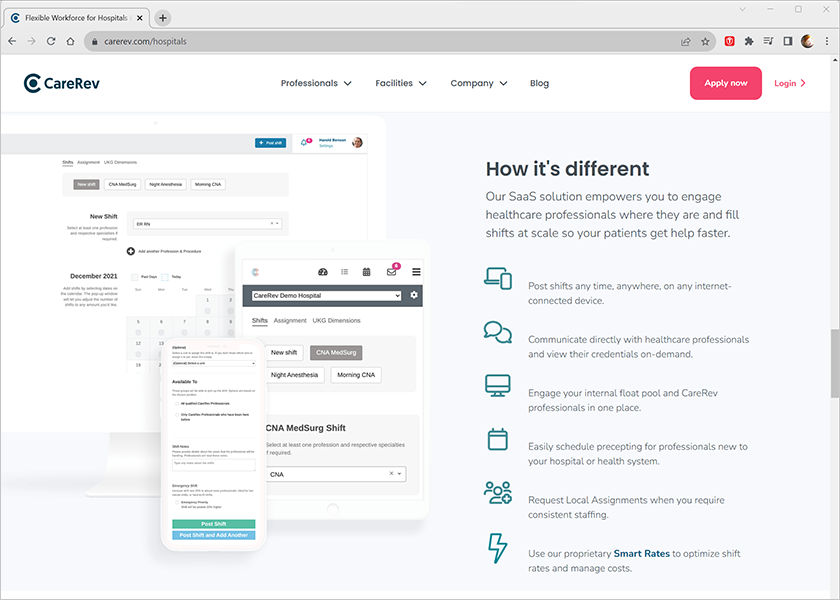
CareRev is a healthcare staffing technology platform that connects healthcare professionals with shifts available at local healthcare facilities.
Before nurses can work at these facilities, they are required to complete several onboarding steps to insure patient health and safety. Conversations with facility administrators, staffing nurses, and our internal Professional Advocates revealed that Provisioning – the process of providing credentials and badges to access health systems – was a slow, manual, and labor-intensive part of the onboarding process.
The Business Opportunity
› Faster Provisioning could reduce costs
› Faster Provisioning could reduce costs
Adding a new Provisioning UI within our B2B/B2C apps was an opportunity to reduce Provisioning times, reduce internal operations costs, and improve the onboarding experience.
MY ROLE
As Sr. Product Designer, I worked with Product Manager, Tony Gabriel and a team of engineers to perform research, interviews, and design the first phase of the B2B Provisioning UI—as well as providing a long-term roadmap.
Continuing the Research
Performing deeper research into the Provisioning process revealed an unexpected critical security liability that was putting our customers and company at risk.
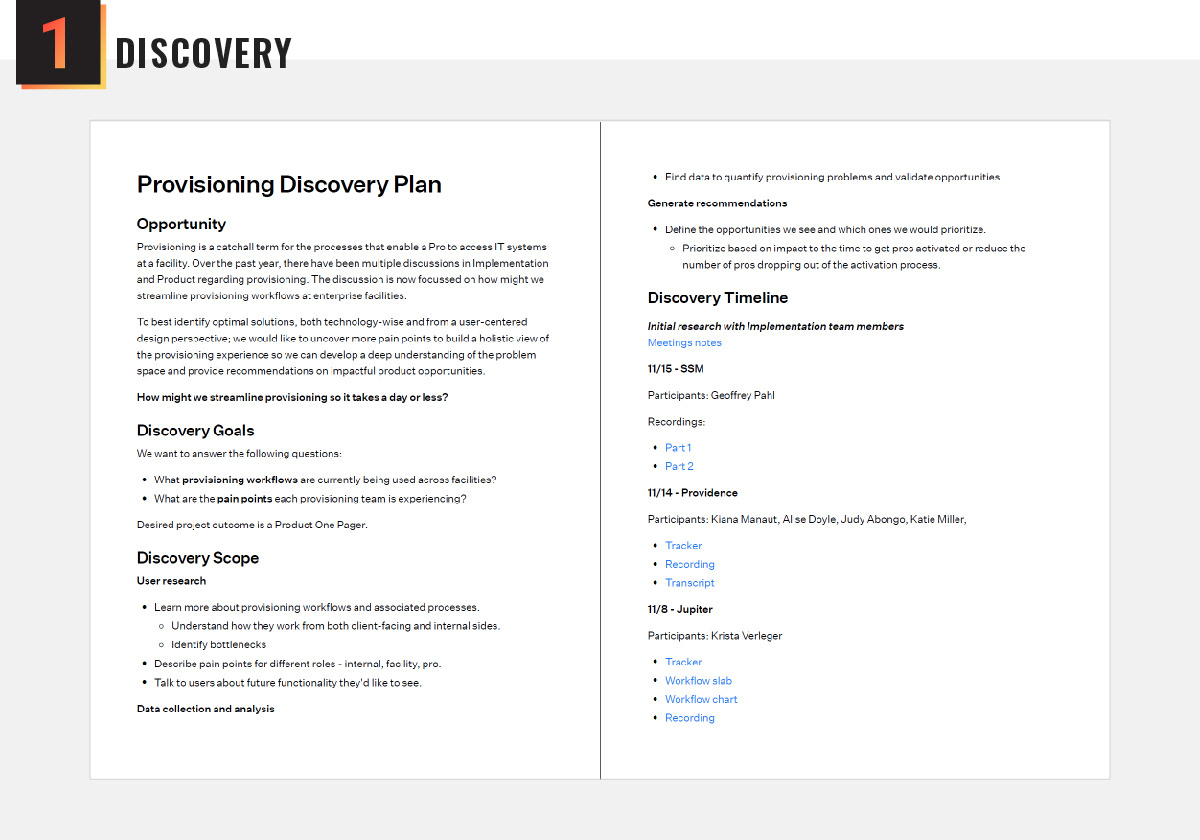
Because another team initiated the original discovery, there was a lot of material for us to sort through. We reviewed documentation, user interview recordings, internal data, spreadsheet tracking, and planned our next steps.
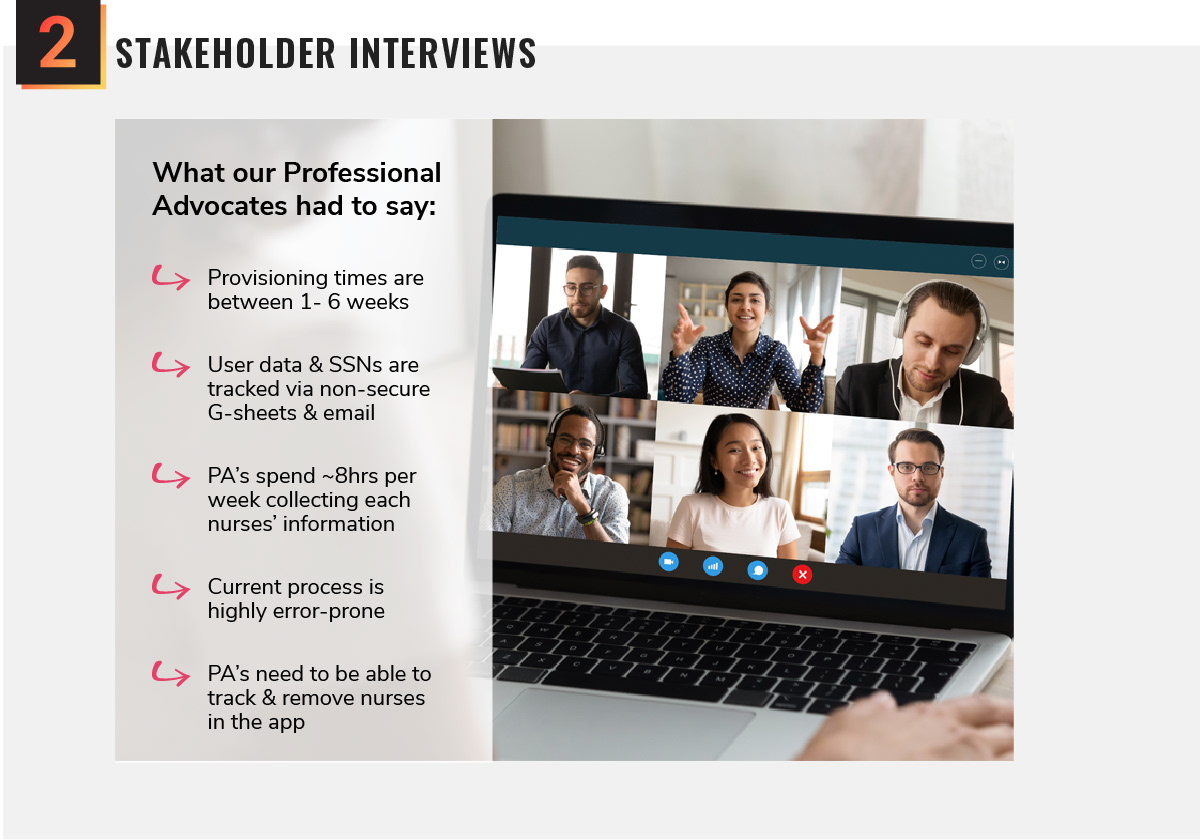
While the initial discovery did a good job identifying the user needs, it was clear we needed to better understand how our Professional Advocates facilitated provisioning within healthcare systems.
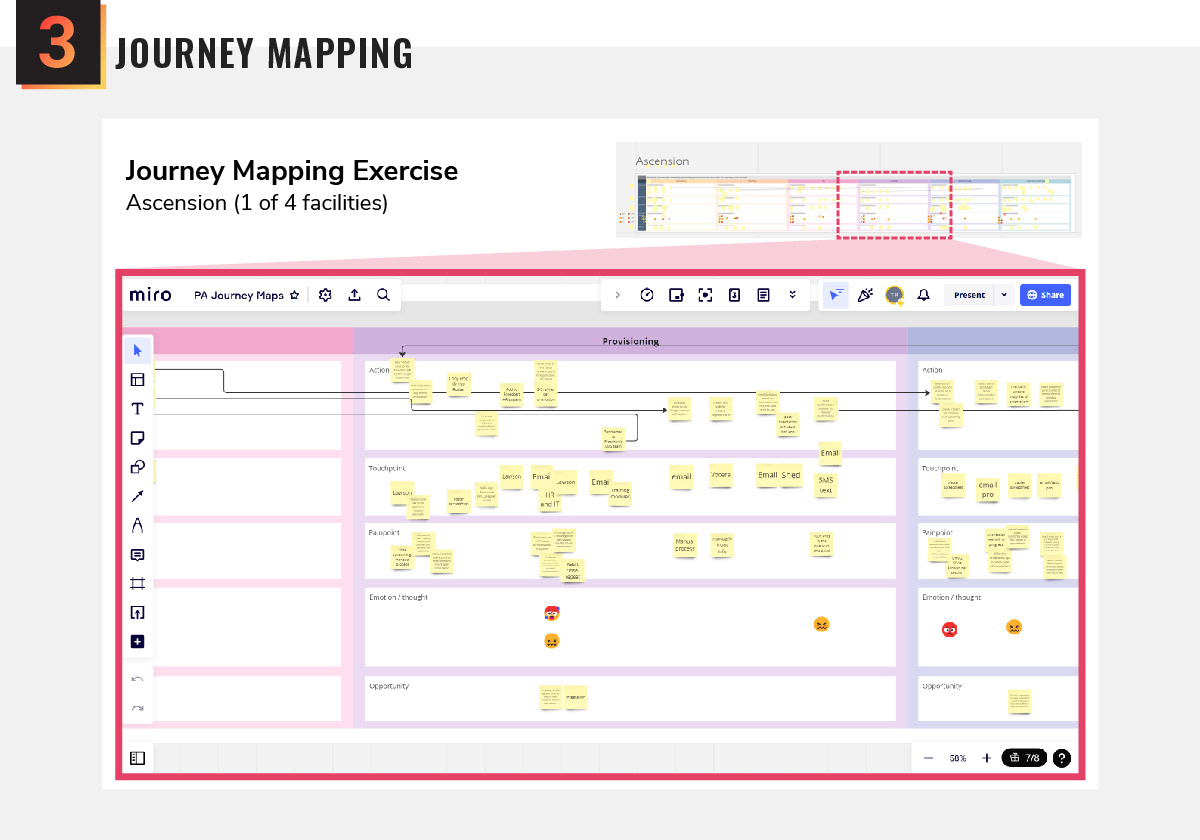
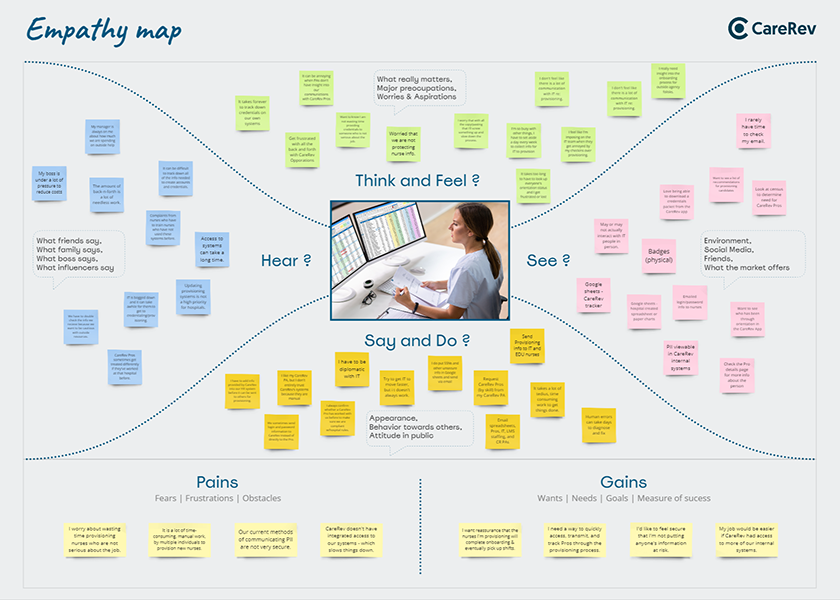
Journey mapping allowed us to better understand how provisioning fit within the overall onboarding process. It also revealed that the transfer of private customer information was occuring outside of secure channels, creating a major legal liability.
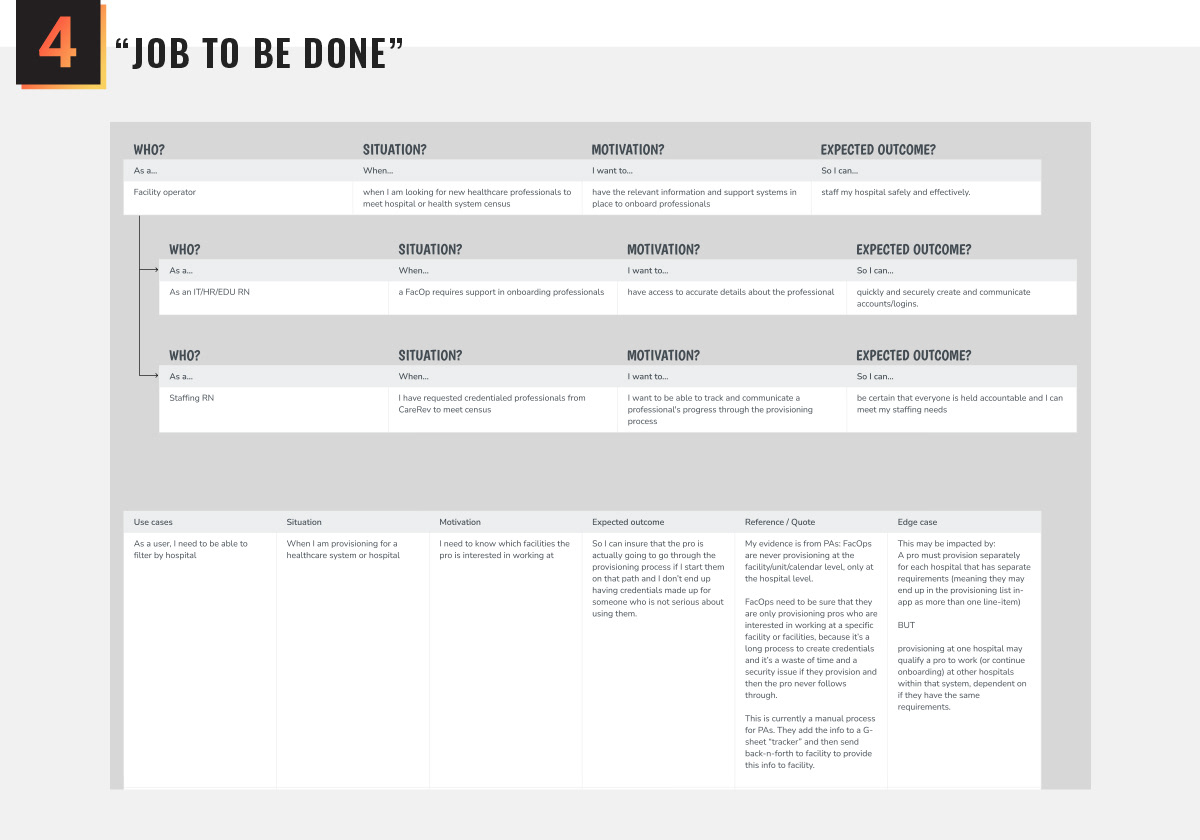
Using Anthony W. Ulwick's "Jobs to be Done" framework, we wrote up documentation outlining action-specific use cases and mapped out next steps, possible challenges, and supporting evidence.
Applying what we learned
Limited resources and scope creep forced us to make compromises within the user interface design, but future- proofing allowed us to better refine our product roadmap.
Ideation & design concepts
› Compromises made fast delivery possible
› Compromises made fast delivery possible
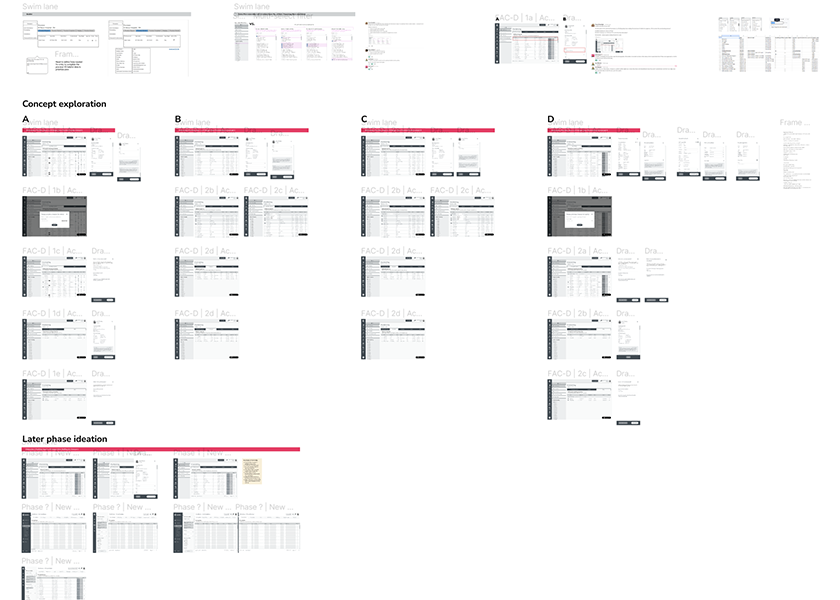
Our initial goal was to integrate the new Provisioning UI with the other onboarding tools. However, as we began to design for this, it quickly became apparent that our app's existing navigation structure, combined with tech debt, was going to be an obstacle to implementing the ideal experience.
So, while I was able to ideate on how future states may look and function, we were forced to plan out a phased approach which would give us time to get valuable feedback with the initial rollout, while also providing engineers time to update our internal app structure to facilitate future iterations.
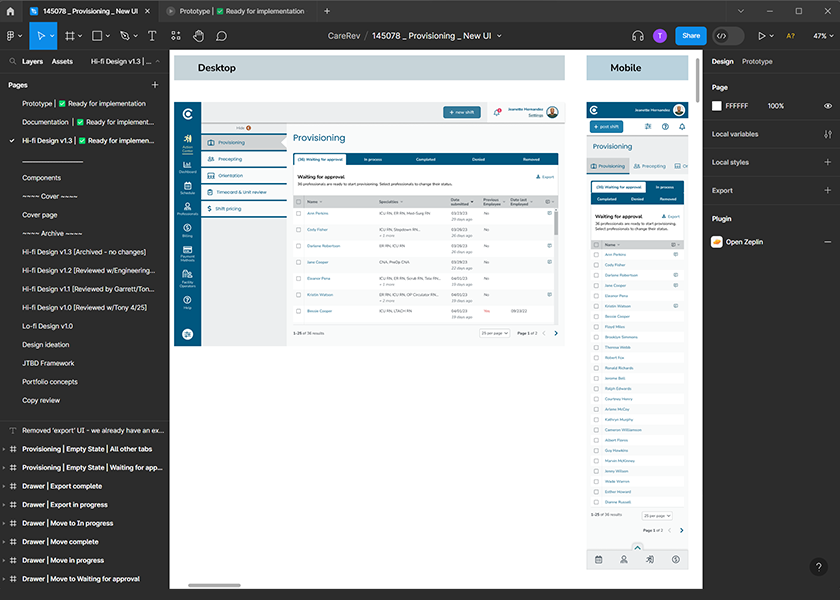
Hi-fis & Interactive Prototypes
› Professional Advocates loved the prototype
› Professional Advocates loved the prototype
After reviewing wireframe concepts with our product team and various stakeholders, we were able to narrow down our approach. Using components from the Figma design system* allowed us to quickly move from wireframe concept to hi-fi mockups. Despite limitations, I was able to use innovative design choices to reduce the user workload by half. Our Professional Advocates were incredibly excited for their healthcare system contacts to experience the new updates.
*Shortly after being hired at CareRev, I created a temporary design system in Figma until an official design system could be created.
Giving our users a voice
Demonstrating our prototype to Healthcare Provisioners at two of our beta test facilities provided critical feedback and stirred excitement for the final product.
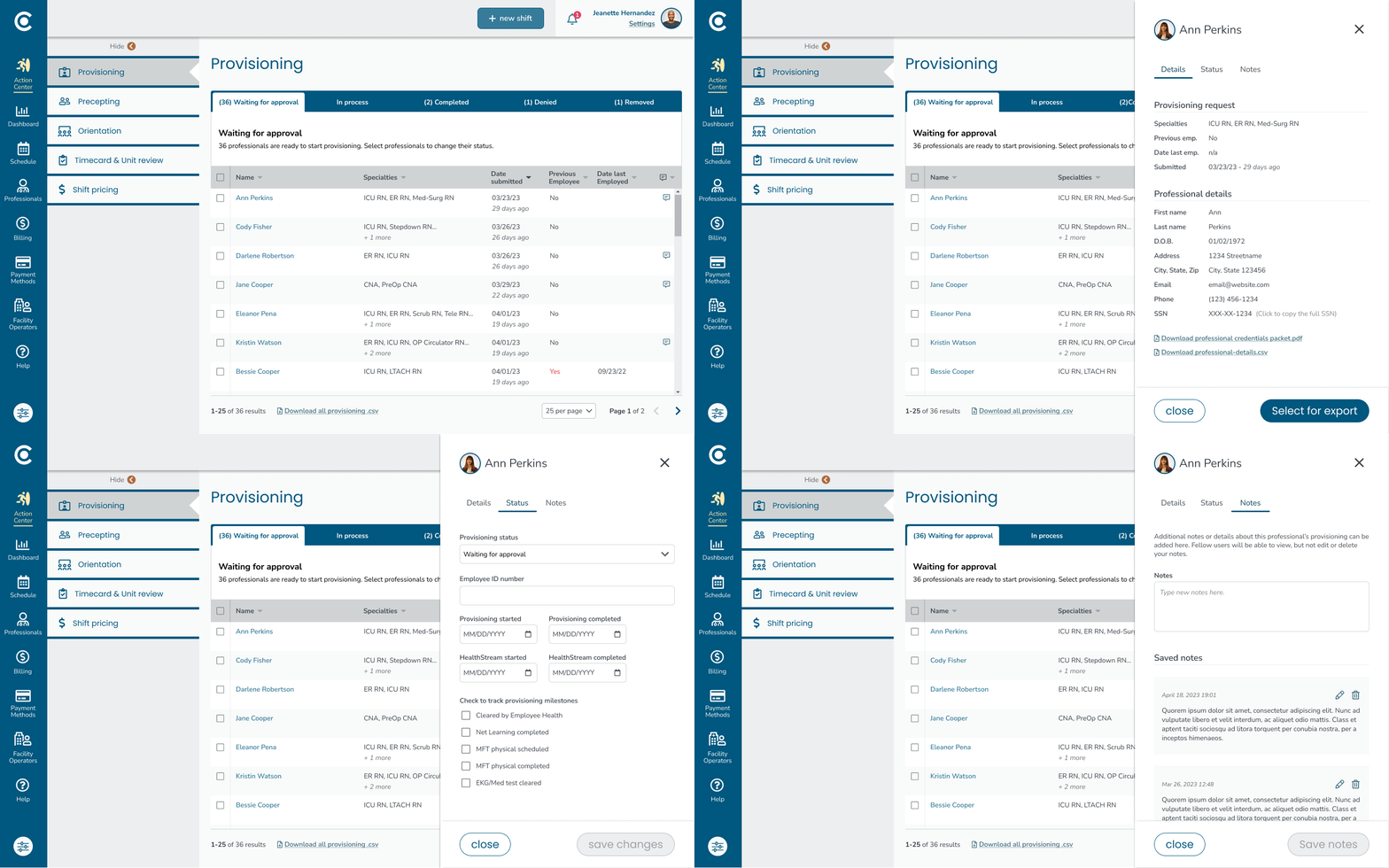
Working with my PM, Tony, we demonstrated the new prototype for the Provisioning Nurses at both New Bergan and St. Joseph's hospitals. Both participants expressed that the interface seemed intuitive at first glance and they were both excited to try the final implemented changes.
Additionally, their feedback resulted in the addition of a link to allow Provisioning Nurses to download the candidate's credentials directly from the Provisioning UI and additional automated checks being added to the internal software our Professional Advocates use when determining which CareRev Professionals to submit for Provisioning.
Implementing the final concept
Providing detailed design and interaction notes for our engineers allowed them to build the user interface to spec, even though I was laid off prior to completion.
development & rollout
› Good communication made success possible
› Good communication made success possible
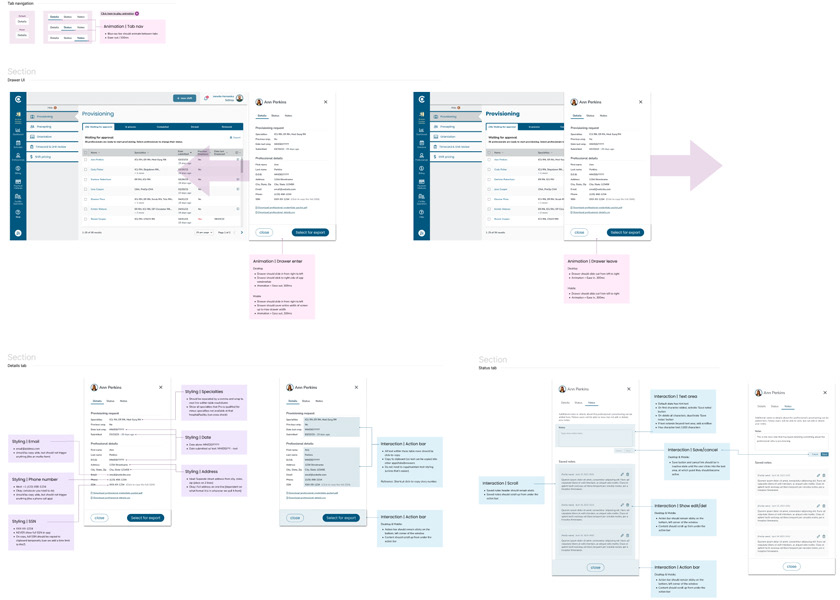
I like to make sure engineers are involved in the design process from the outset, and this project was no exception. Regardless, I prefer to provide comprehensive notes to aid engineers during implementation. At CareRev, our Product team's process included documentation in Figma, as well as uploading files and detailing flows in Zeplin.
I have it on good authority that this was appreciated by my engineers as I was laid-off during the implementation process and they were able to use my notes to complete the project.
The final product
Though I was laid off prior to its release, the final product was well received during beta testing and according to my PM, initial feedback was very positive.
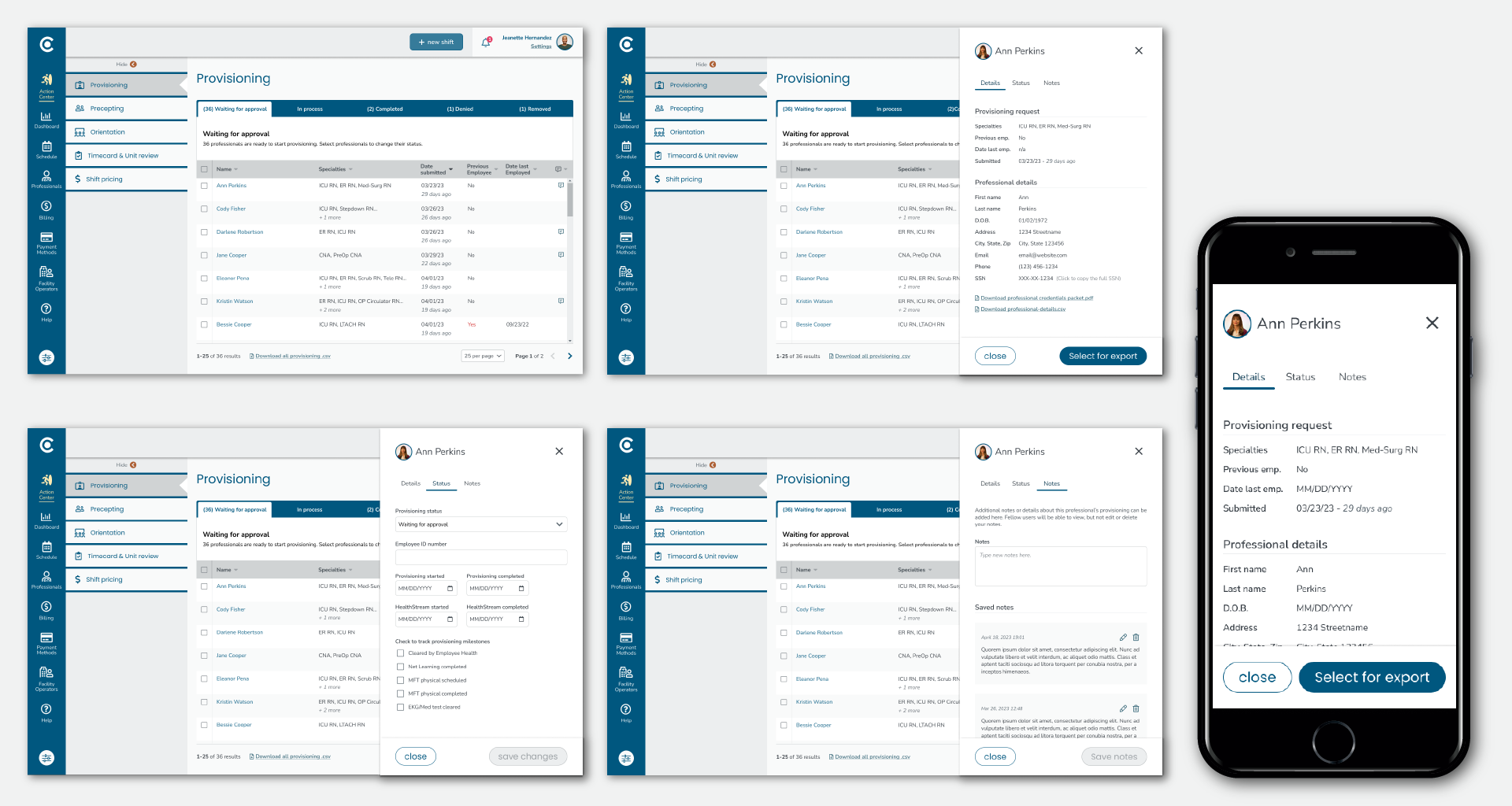
The initial plan for rolling out the final product was to release the Phase 1 Provisioning UI to the two beta test customers for whom we were able to collect and provide the salient data. The product team would then be able to track its performance in Amplitude to pull data, in addition to performing surveys and interviews post-release to determine the success of the new UI.
According to my former PM, Tony, while CareRev is still in the process of collecting usage data since it's release to our first beta customer, the feedback has been very positive thus far. Brenda Bariteau, Sr Employee Experience Coordinator for St Josephs, said, "I love it! It's even more than what I expected from discussing it with you before."
Key Learnings
This project really drove home just how important it is to utilize your Operational stakeholders for their expertise. It was also clear that even a security-conscious company needs to be continuously vigilant in securing their customer's information.